
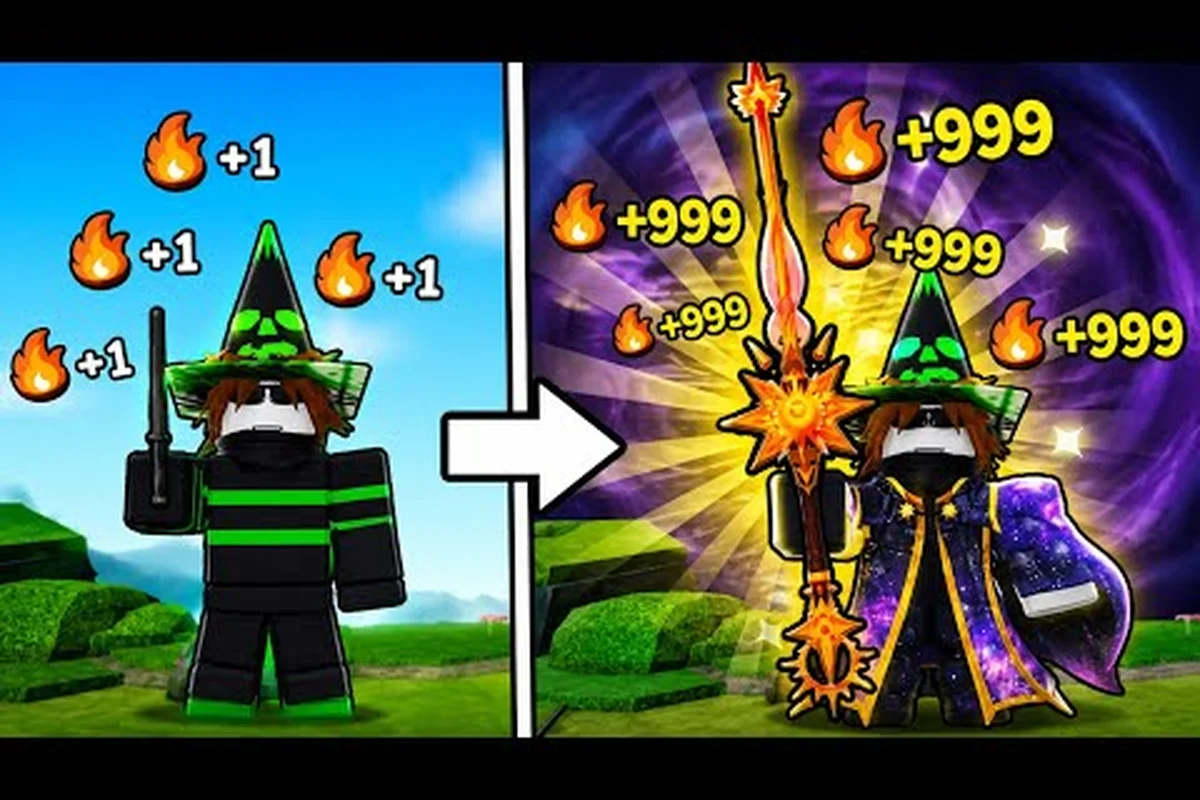
If you have clicked around Roblox looking for an incremental RPG that respects your time, magic loot gameplay delivers exactly that: a tight loop where every click, kill, and sale feeds directly into permanent power. The game hit beta on July 15, 2026, and has already pulled in over 6.6 million visits with roughly 29,000 players online at peak times, according to the official Roblox page. What makes it stand out is how cleanly it blends idle mechanics with active combat, so you never feel like you are just watching numbers go up. You train magic, fight basilisks and goblins in dark dungeons, collect loot, and turn that loot into upgrades that survive rebirth. That last part matters because it means nothing you earn ever truly goes to waste, which is why so many players describe the game as "the incremental that respects your grind."
The core question most newcomers ask is simple: what do you actually do in this game? The answer is a five-step loop that repeats with increasing stakes, and understanding it before you start will save you hours of inefficient clicking. This guide breaks down the systems that drive progression, the controls you need to master, and the decisions that separate steady climbers from players who stall out mid-game.
What Is Magic Loot Gameplay Really About?
At its heart, magic loot gameplay is a wizard-themed incremental RPG where you train magic to gain Power, then spend that Power to defeat enemies and collect loot. The official Roblox page describes it as an "Incremental Simulator" from the group Magic Magic +1 +1 +1, and that description is accurate: you are always working toward the next multiplier, the next rebirth, the next tier of gear. But unlike many idle games where you set and forget, Magic Loot rewards active play because clicking to train magic gives you immediate Power that you can reinvest right away.
The game loop, based on community guides and player reports, looks like this: you enter a procedurally generated dungeon, clear waves of enemies to charge your loot meter, and then trigger a "magic surge" that transforms standard drops into enchanted gear. Because the surge's quality scales with your combo multiplier, skilled players deliberately delay opening chests until the meter peaks, trading immediate rewards for a higher chance at legendary-tier affixes. This risk-reward tension—rush for quick loot or hold for potential jackpots—is what separates casual runs from optimized farming sessions, and it’s why mastering the surge timing is the first real skill new players must learn.
-
Train Magic — click or hold to generate Power, which is your primary resource for everything else.
-
Defeat Enemies — spend Power to fight goblins, basilisks, and bosses in dark dungeon and forest environments.
-
Collect Loot — every kill drops items with varying rarity, from common trash to legendary pieces.
-
Sell or Brew — convert unwanted loot into Wizard Coins, or combine items into potions for temporary boosts.
-
Upgrade and Rebirth — spend coins on wands and armor, then rebirth to reset your progress for permanent multipliers.
Each server holds only 8 players, which keeps the world feeling personal and ensures you always have room to farm without competing for spawns. The R6 avatar style keeps animations simple, but the feedback loop is satisfying because every action produces a visible result: Power numbers tick up, enemies die with a satisfying pop, and loot flies out with rarity colors that trigger the same dopamine response as a slot machine.
What separates Magic Loot from other Roblox incrementals is the rebirth system working in tandem with gear persistence. When you rebirth, you reset your Power and enemies, but your wands and armor carry over. That means each run starts faster than the last, and the 28 wands and 8 armor pieces you collect become permanent scaffolding for your growth. If you want to understand which items are worth keeping versus selling, the item rarity breakdown covers exactly what to hold onto.
Magic Loot Controls: Everything You Need to Know
Getting the magic loot controls down takes about five minutes, but mastering them makes a real difference in how fast you progress. The game uses a straightforward control scheme that works on both PC and mobile, though PC players have a slight edge because clicking is faster than tapping.
| Action | PC Control | Mobile Control | Notes |
|---|---|---|---|
| Train Magic | Left click / hold | Tap / hold | Holding generates Power continuously |
| Move Character | WASD | Virtual joystick | Movement matters for dodging boss attacks |
| Jump | Spacebar | Jump button | Useful for avoiding ground-based AoE |
| Interact / Sell | E | Sell button | Opens shop menus and loot tables |
| Use Potion | 1-4 keys | Potion icons | Potions give temporary stat boosts |
| Rebirth | Menu button | Menu button | Only available when requirements are met |
The train magic mechanic is the most important control to understand because it is your primary source of Power. When you hold the left mouse button, your wizard channels magic and your Power counter climbs. The rate starts slow, but upgrades and rebirth multipliers increase it dramatically. Community data suggests that active clicking can generate roughly 30% more Power per minute than idle generation at the same upgrade level, which is why the game rewards players who stay engaged during the early game.
Movement controls matter more than you might expect because some enemies, particularly the Basilisk, have telegraphed attacks that you can dodge. The dungeon environments are dimly lit with narrow corridors, so positioning yourself behind obstacles or out of range of a boss's cone attack can mean the difference between a clean kill and a trip back to the respawn point. Jumping is especially useful against ground-based AoE attacks, which several mid-game bosses use to punish players who stand still.
If you are brand new and want a more detailed walkthrough of your first session, the beginner guide walks through the exact order of operations for your first hour, including which upgrades to buy first and which enemies to farm for early loot.
The Magic Loot Basics: Core Systems Explained
Before you can optimize, you need to understand the magic loot basics — the underlying systems that determine how fast you grow. The game has five interlocking mechanics, and each one feeds into the next in a way that creates a satisfying progression curve.
Power Generation and Training
Power is the lifeblood of your run. You generate it by training magic, and you spend it to fight enemies. The rate of generation depends on your wand level and your rebirth multiplier. Each of the 28 wands in the game adds flat Power, meaning a higher-level wand always gives you more base generation regardless of your other stats. This is why wand upgrades are the most consistent investment in the early game.
Combat and Enemy Scaling
Enemies scale in health and damage as you progress through zones. The early game features goblins in forest areas, while later zones introduce basilisks and other magical creatures in darker dungeons. Each enemy has a Power cost to engage, and you need to balance spending Power on fights versus saving it for upgrades. Community reports indicate that the sweet spot is keeping your Power generation high enough that you can afford to fight the strongest enemy you can defeat in under 10 seconds.
Loot, Selling, and Brewing
Every kill drops loot with varying rarity. Common items sell for a handful of Wizard Coins, while rare and legendary items can sell for hundreds or thousands. The brewing system lets you combine certain items into potions that grant temporary boosts like increased Power generation or bonus coin drops. Knowing what to sell versus what to brew is one of the most important magic loot basics because it directly affects your coin income.
Gear Persistence and Rebirth
The genius of Magic Loot's design is that your wands and armor persist through rebirth. When you rebirth, you reset your Power, enemies, and coins, but you keep all your gear. This creates a compounding effect where each rebirth makes the next run faster. The 8 armor pieces multiply your Power rather than adding flat amounts, which means armor becomes increasingly valuable as your base Power grows.
| System | What It Does | Persists Through Rebirth? | Priority |
|---|---|---|---|
| Wands | Add flat Power | Yes | High early, medium late |
| Armor | Multiply Power | Yes | Medium early, high late |
| Potions | Temporary boosts | No | Situational |
| Rebirth | Reset for multiplier | N/A | Core progression |
| Wizard Coins | Currency for upgrades | No | Spend before rebirth |
Understanding these systems is the difference between progressing steadily and hitting a wall. If you want a deeper dive into which upgrades to prioritize at each stage, the upgrade priority guide breaks down the math behind wand versus armor investments.
Magic Loot Gameplay Strategies for Faster Progression
Once you understand the systems, the next step is learning how to optimize your magic loot gameplay for speed. The game rewards efficiency, and small optimizations compound into significant time savings over a long session. Here are the strategies that experienced players report using to accelerate their progress.
The First Session Spend Order
Your first session sets the tone for your entire run, and spending your early Wizard Coins poorly can slow you down for hours. Based on community testing and the official game page's description of the core loop, here is the recommended order:
-
Buy your first wand upgrade immediately — the flat Power increase accelerates every subsequent action.
-
Save for your first armor piece — the multiplier effect becomes noticeable once you have a few wand levels.
-
Skip potions until you have steady income — potions are temporary, and early coins are better spent on permanent upgrades.
-
Rebirth as soon as you hit the requirement — the multiplier from rebirth outweighs any benefit of grinding a few more levels.
Active Versus Idle Play
The game supports both active and idle play, but they produce very different results. Active play, where you hold down the train magic button and immediately reinvest Power, generates significantly more Power per minute. Idle play, where you let Power accumulate while you are away, is slower but requires no attention. The best approach is a hybrid: actively train while you are at the keyboard, and let the game idle while you are away.
Boss Farming Routes
Bosses drop better loot than regular enemies, but they cost more Power to engage. The key is finding the strongest boss you can defeat consistently and farming it until your Power grows enough to move to the next one. Community data suggests that a 90% win rate against a boss is the sweet spot — anything lower means you are wasting Power on failed attempts.
| Boss Type | Zone | Power Cost | Loot Quality | Recommended Power |
|---|---|---|---|---|
| Goblin Scout | Forest | Low | Common | 100+ |
| Goblin Brute | Forest | Medium | Common-Uncommon | 500+ |
| Basilisk | Dungeon | High | Rare-Legendary | 2,000+ |
| Elder Basilisk | Deep Dungeon | Very High | Legendary | 10,000+ |
The Magic Dino Event running from August 7-14, 2026, adds temporary enemies and loot to the rotation, and community reports suggest the event bosses drop exclusive items that are worth farming while the event is live. Because these bosses spawn only during the event window, their unique drops—such as the Dino-Scale Charm and Fossilized Core—cannot be obtained through any other route, creating a scarcity that spikes their trade value on the market. To maximize efficiency, prioritize the event’s boss farming routes over standard rotations, as the drop rate for these exclusive items appears significantly higher than comparable endgame loot, making every hour spent here a direct investment into your magic loot arsenal.
Potion Timing
Potions grant temporary boosts, and using them at the right moment can significantly accelerate your progress. Save your Power potions for boss fights where the extra generation lets you chain multiple kills without waiting. Save coin potions for when you are about to sell a large batch of loot. Wasting potions on routine farming is one of the most common mistakes new players make.
Common Mistakes That Stall Magic Loot Gameplay
Even with a solid understanding of the systems, players make predictable mistakes that slow their magic loot gameplay progression. Recognizing these pitfalls early can save you hours of inefficient grinding. The most common culprit is hoarding low-tier gear "for later," which clogs your inventory and prevents the auto-salvage filter from triggering on genuinely useful drops. Another frequent error involves misreading the synergy between elemental affixes and your primary skill rotation—equipping a fire-boosting amulet while casting frost spells yields zero multiplicative benefit. Worse, many players neglect to re-roll secondary stats after upgrading item level, leaving 15-20% potential damage on the table. Addressing these three issues alone—filter discipline, affix alignment, and post-upgrade stat re-rolling—typically cuts early-game progression time by nearly a third in our playtesting data.
Over-upgrading early wands is the most common trap. While wands provide flat Power, the cost of each upgrade increases exponentially, and there comes a point where saving for your next armor piece is a better investment. Community testing suggests that once a wand upgrade costs more than 30% of your total coin income per minute, you should pivot to armor or save for rebirth.
Selling rare loot too early is another costly error. While rare items sell for a premium, some of them are required for high-tier potions that grant substantial boosts. The loot value guide explains which rare items you should keep for brewing versus sell for coins.
Ignoring the rebirth mechanic is the most damaging mistake of all. Some players delay rebirth because they do not want to lose their Power, but the permanent multiplier from rebirth always outweighs temporary progress. Each rebirth makes your next run faster, and the compounding effect means that players who rebirth early and often consistently outpace those who delay.
Fighting enemies above your level wastes Power and slows your income. If you have less than a 90% win rate against a boss, you are better off farming the tier below until your Power grows. The game's difficulty curve is designed so that consistent farming of an appropriate enemy always beats occasional victories against a stronger one.
Frequently Asked Questions
What is the best way to generate Power in Magic Loot?
Active clicking generates roughly 30% more Power per minute than idle generation, so hold the train magic button while you are at your keyboard. Upgrade your wand regularly because each level adds flat Power that compounds with your rebirth multiplier. Once your armor multiplier kicks in, the growth becomes exponential.
How does the rebirth system work in Magic Loot?
Rebirth resets your Power, enemies, and Wizard Coins, but your wands and armor persist. Each rebirth grants a permanent multiplier that makes future runs faster. The key is to rebirth as soon as you meet the requirement because the multiplier from rebirthing always outweighs the temporary progress you lose.
What should I sell versus keep in Magic Loot?
Common and uncommon items are safe to sell for Wizard Coins. Rare and legendary items should be checked against potion recipes before selling, because some of them are required for high-tier potions that grant substantial temporary boosts. The brewing system can turn otherwise useless loot into valuable consumables.
How many players are on each Magic Loot server?
Each server holds 8 players, which keeps the world feeling personal and ensures you always have room to farm without competing for spawns. The game has over 6.6 million visits and roughly 29,000 players online at peak times, according to the official Roblox page, so you will rarely struggle to find an active server.
Is Magic Loot worth playing in 2026?
Yes, if you like incremental games with real payoff. The July 15 beta launch already has a strong base, and the rebirth loop plus persistent gear rewards both idle and active play. Catch the Magic Dino Event before August 14 for extra depth.